

Hospitals and clinics face a security challenge most businesses never have to think about: they must stay open to the public while protecting the most vulnerable people inside their walls. Modern healthcare security combines duress alarms, video analytics, and access control into one connected system so staff can respond in seconds, not minutes.
We work with hospitals, urgent care centers, and specialty clinics across Texas, Oklahoma, and Arkansas, and we see the same pressure everywhere. Patient volumes are up, staff are stretched thin, and threats have grown more complex. A security plan built five years ago may no longer be enough. Below, we break down what modern healthcare security actually looks like and why each piece matters.
Why Do Hospitals Need More Than Just Cameras?
Cameras alone only show you what already happened. They cannot stop a threat as it unfolds or tell a nurse she needs help right now. A modern healthcare security system pairs recorded video with tools built for immediate response, such as duress buttons, access control, and real-time alerts.
Think of a camera as a witness and a duress system as a responder. Both are useful, but only one can act while an incident is happening. Facilities that rely on cameras alone often discover the gap only after something goes wrong, when footage confirms an incident but did nothing to prevent it. Layered security has become the standard in healthcare settings, not a luxury reserved for large hospital systems.
What Is a Duress System, and Why Does It Matter in Healthcare?
A duress system is a discreet alarm that lets staff request emergency help without drawing attention to themselves. Nurses, front desk staff, and pharmacy workers can trigger a silent alert from a badge, a wall-mounted button, or a mobile device, and security or law enforcement is notified with the exact location.
Healthcare workers face a higher rate of workplace violence than employees in almost any other industry, according to data tracked by the Bureau of Labor Statistics. Emergency departments, behavioral health units, and pharmacies see the highest incident rates because these areas often involve stressed patients, family members in crisis, or controlled substances. A well-placed duress system gives staff a way to call for help even when stepping away from a patient is not possible.
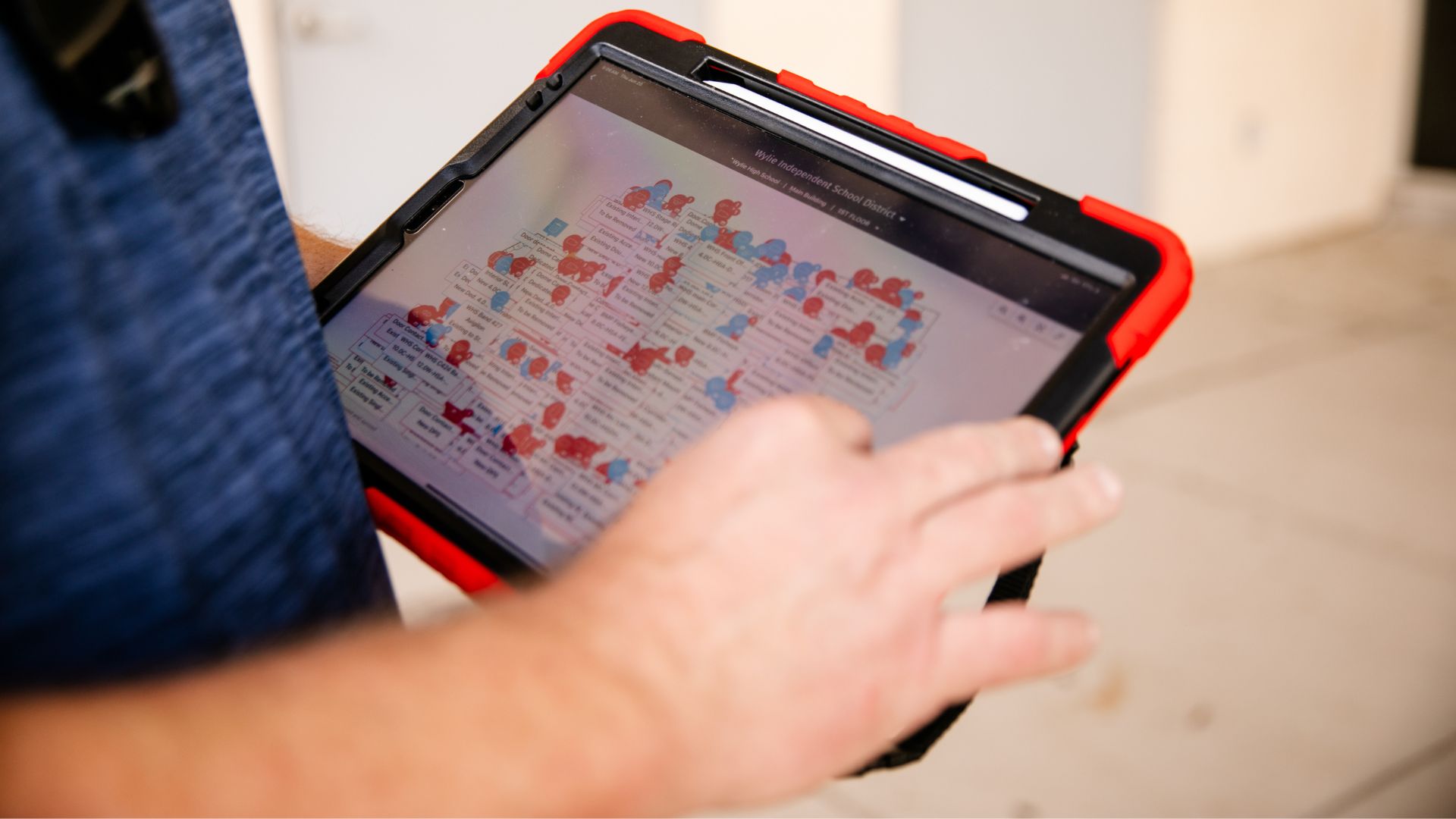
Duress buttons only work if they are placed where staff actually need them, not just where they are easiest to install. We walk every space with facility leadership to map out realistic scenarios, then place devices in exam rooms, nurses' stations, medication rooms, and other high-risk areas based on how the space is really used.
How Does Video Analytics Improve Hospital Security?
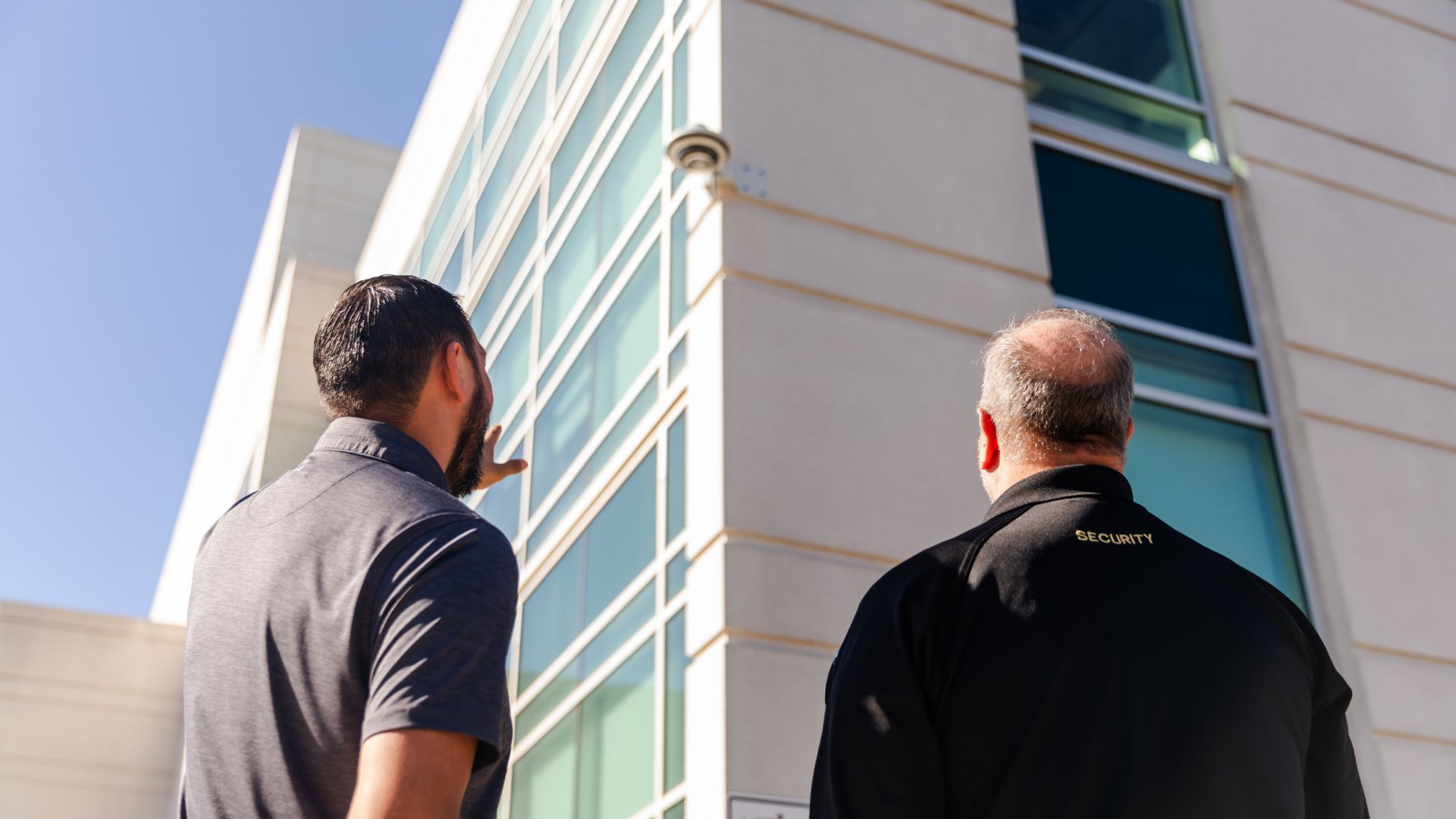
Video analytics uses software to scan live camera feeds and automatically flag unusual activity, such as a person entering a restricted area or a wheelchair left unattended in a fire exit. Instead of a security guard watching dozens of screens and hoping to catch something, the system does the watching and sends an alert the moment something needs attention.
This shift matters because most healthcare facilities cannot staff a security operations center around the clock, and even the ones that can are asking a person to do something computers are simply better at: noticing patterns across hundreds of hours of footage. Analytics can spot loitering near a maternity ward, detect a door propped open in a medication storage area, or flag a vehicle circling a parking structure. Staff get the alert, review the footage instantly, and decide how to respond.
Facial recognition and license plate recognition extend this even further. A visitor who was previously banned from the property can be flagged the moment they walk through the door, before they reach a patient floor. For facilities that have dealt with a difficult custody situation, a domestic dispute spilling into the parking lot, or a person with a documented history of disruptive behavior, this kind of early warning changes the entire response timeline.
What Should a Hospital Security Plan Include?
A complete hospital security plan combines several systems working together rather than one device solving every problem. At minimum, most facilities need video surveillance with analytics, electronic access control, duress alarms, visitor management, and infant protection if the facility includes a maternity unit.
- Access control limits who can enter sensitive areas like the pharmacy, NICU, or medication storage, and it creates a record of who went where and when.
- Visitor management replaces the paper sign-in sheet with a system that runs a quick background check, prints a badge, and flags anyone who should not be on the premises.
- Infant protection systems use a tag attached to a newborn that triggers an alarm and can lock nearby doors if the baby is moved past a set boundary, which is one of the most effective abduction deterrents available.
- Patient wander management helps facilities with dementia or Alzheimer's patients keep individuals safe without restricting their movement more than necessary.
We build layered security systems that connect all of these pieces into one platform, so a triggered duress alarm can automatically pull up the nearest camera feed, or a flagged visitor can be denied badge access without a staff member needing to intervene manually.
What Compliance Requirements Apply to Healthcare Security?

Happy asian female doctor and senior african american male patient talking in hospital corridor. Hospital, medical and healthcare services.
Healthcare facilities must meet security and privacy standards under HIPAA, and many also follow guidelines from the Joint Commission related to workplace violence prevention and environment of care. These are not just paperwork requirements. They shape decisions like where cameras can be placed, how long footage is stored, and who has access to security data.
HIPAA does not regulate physical security cameras directly, but it does apply once video or access logs contain identifiable patient information, which happens more often than most administrators expect. A camera pointed at a nurse's station that also captures a patient chart on a screen can create a compliance question. The Joint Commission has increased its focus on workplace violence prevention programs in recent years, and a documented security plan with staff training is now part of what surveyors look for during accreditation visits.
One detail that catches facilities off guard: state licensing boards in Texas, Oklahoma, and Arkansas each have their own rules about video retention and access logs for healthcare settings, and these can differ from federal guidance. A security partner familiar with the region can help make sure your system meets both.
How Long Should Hospitals Keep Security Footage?
Most healthcare facilities keep security footage for 30 to 90 days, though this can extend to a year or more depending on state requirements and the facility's own risk policies. Areas connected to controlled substances, infant care, or behavioral health often warrant longer retention because incidents in these areas can take time to surface or investigate.
Storage costs used to make longer retention impractical for smaller facilities, but cloud-based video storage has changed that math. Many hospitals now store footage offsite, which also protects the recordings if something happens to the physical building, such as a fire or severe weather event.
Common Mistakes Healthcare Facilities Make with Security
The most common mistake we see is treating security as a one-time installation rather than an ongoing system that needs regular review. Staff turnover is high in healthcare, and if new employees are not trained on how duress buttons work or how to respond to an access control alert, the technology sits unused during the moment it matters most.
A second mistake is underestimating interior threats. Facilities often invest heavily in perimeter security, like parking lot cameras and front door access control, while giving far less attention to internal areas such as medication rooms, behavioral health units, and staff-only corridors. Yet a significant share of healthcare security incidents happen inside the building, not at the entrance.
A third issue is choosing standalone systems that do not talk to each other. A camera system from one vendor, an access control system from another, and a duress alarm from a third often cannot share data, which means staff check three different dashboards during an emergency instead of one. Integration is often the difference between a fast response and a delayed one.
Building a Safer Healthcare Facility
Modern healthcare security is not about adding more cameras or more alarms. It is about connecting the right combination of tools, duress systems, video analytics, access control, and compliance-ready recordkeeping, into a single plan that protects patients and staff without slowing down care. Facilities across Texas, Oklahoma, and Arkansas are finding that a layered, integrated approach catches problems earlier and gives staff the confidence to respond quickly when something goes wrong.
Digi Security Systems has spent more than two decades designing security systems for hospitals, urgent care centers, senior living communities, and specialty clinics throughout the region. We know healthcare facilities cannot pause patient care to accommodate a security overhaul, which is why we design solutions around how your facility actually operates. From infant protection to duress alarms to full visitor management on our healthcare page, our team builds systems that protect what matters most without slowing down the care your patients depend on. Contact us today to talk through what a modern security plan could look like for your facility.