

Government buildings are not like offices. A courthouse handles active criminal cases, holds evidence, and manages defendants in custody. A municipal building processes permits, tax records, and personal data for thousands of residents. A public utility facility keeps the lights on for an entire county. These are not environments where a basic lock-and-key setup will do the job.
The challenge facing counties and cities across Texas, Oklahoma, and Arkansas is not a shortage of security equipment. It is fragmented systems that cannot talk to each other. A courthouse may have cameras from one vendor, door access from another, and a visitor log kept in a spreadsheet. When something goes wrong, nobody can pull the full picture fast enough. That is the problem integrated access control solves.
What Makes Government Facilities Different from Other Buildings?
Government facilities carry a specific set of risks that separate them from corporate offices or retail spaces. First, they serve the public, which means unrestricted foot traffic through certain areas alongside highly restricted zones sitting just a few doors down. A courthouse lobby, for example, must be accessible, while the judge's chambers, evidence rooms, and jury deliberation rooms must be locked down tight.
Second, government buildings are targets. They hold sensitive data, store cash and bonds, manage immigration documents, and in some cases house inmates or detainees. The stakes are high, and the margin for error is low.
Third, accountability matters in ways it does not elsewhere. If a piece of evidence goes missing, if a record is altered, or if an unauthorized person enters a restricted area, there needs to be a clear audit trail. A system that cannot produce that trail is a liability, not just a security gap.
Integrated access control addresses all three of these realities by combining physical entry management with video surveillance, visitor tracking, and real-time alerts into one unified platform.
What Does Integrated Access Control Actually Look Like?
The term "integrated access control" gets used loosely, so it is worth being specific about what a well-designed system actually includes for government environments.
Credential-based entry at every perimeter layer. This means keycards, fobs, or biometric readers at exterior doors, interior hallways, and individual rooms where sensitivity requires it. Credentials can be set by role, so a city clerk's badge opens the records office but not the server room, while a facilities manager can access utility areas but not the evidence vault.
Real-time video tied to access events. When a door is opened or an access attempt is denied, the system automatically pulls the camera feed from that location. Security staff do not have to manually search footage after the fact. The event and the video are linked from the moment they happen.
Visitor management that goes beyond a sign-in sheet. Modern visitor systems photograph each visitor, scan their ID, run a background check, print a time-limited badge, and log their entry and exit. If a visitor overstays or enters an area outside their clearance, staff receive an instant alert.
Lockdown capability with a single command. In a threat scenario, the ability to lock every exterior door in a building simultaneously, or lock down specific wings while leaving evacuation routes open, can be the difference between containment and escalation. Duress buttons and lockdown protocols should be built into the system from the start, not added as an afterthought.
Audit logs that are tamper-evident and easy to search. When legal or administrative inquiries arise, the system needs to produce clean documentation of who was where and when. Cloud-based platforms make this searchable and exportable without requiring IT staff to pull physical logs.
Common Pitfalls County and Municipal Teams Run Into
Government facilities that have attempted to patch together security on a piecemeal basis tend to run into the same problems repeatedly.
The "island" problem. Each system operates independently. The cameras do not know who just badged in. The access control system does not know what the cameras saw. When an incident occurs, staff have to review footage separately, cross-reference badge logs manually, and piece together a timeline under pressure. This costs time and introduces errors.
Outdated credentials that stay active. Contractors finish a job and leave, but their badge access is never revoked. Former employees move on, and IT misses the deactivation step. In a busy county office, this happens more often than most administrators want to admit. Integrated systems can tie credential management to HR workflows so access is automatically reviewed when employment status changes.
No visibility into tailgating. A high-quality camera with video analytics can detect when two people walk through a secured door on a single badge swipe. Without that layer, a building can have a state-of-the-art access system and still have unauthorized individuals inside restricted zones.
Siloed emergency response. In a real emergency, a dispatcher at a 911 center needs to know the floor plan, which doors are locked, where people are congregating, and where the threat appears to be coming from. If the building's security system cannot feed that information to first responders automatically, response time suffers. Cities and counties across Oklahoma and Texas that have upgraded to unified platforms have seen measurably faster response coordination as a result.
How Unified Systems Support Accountability and Compliance
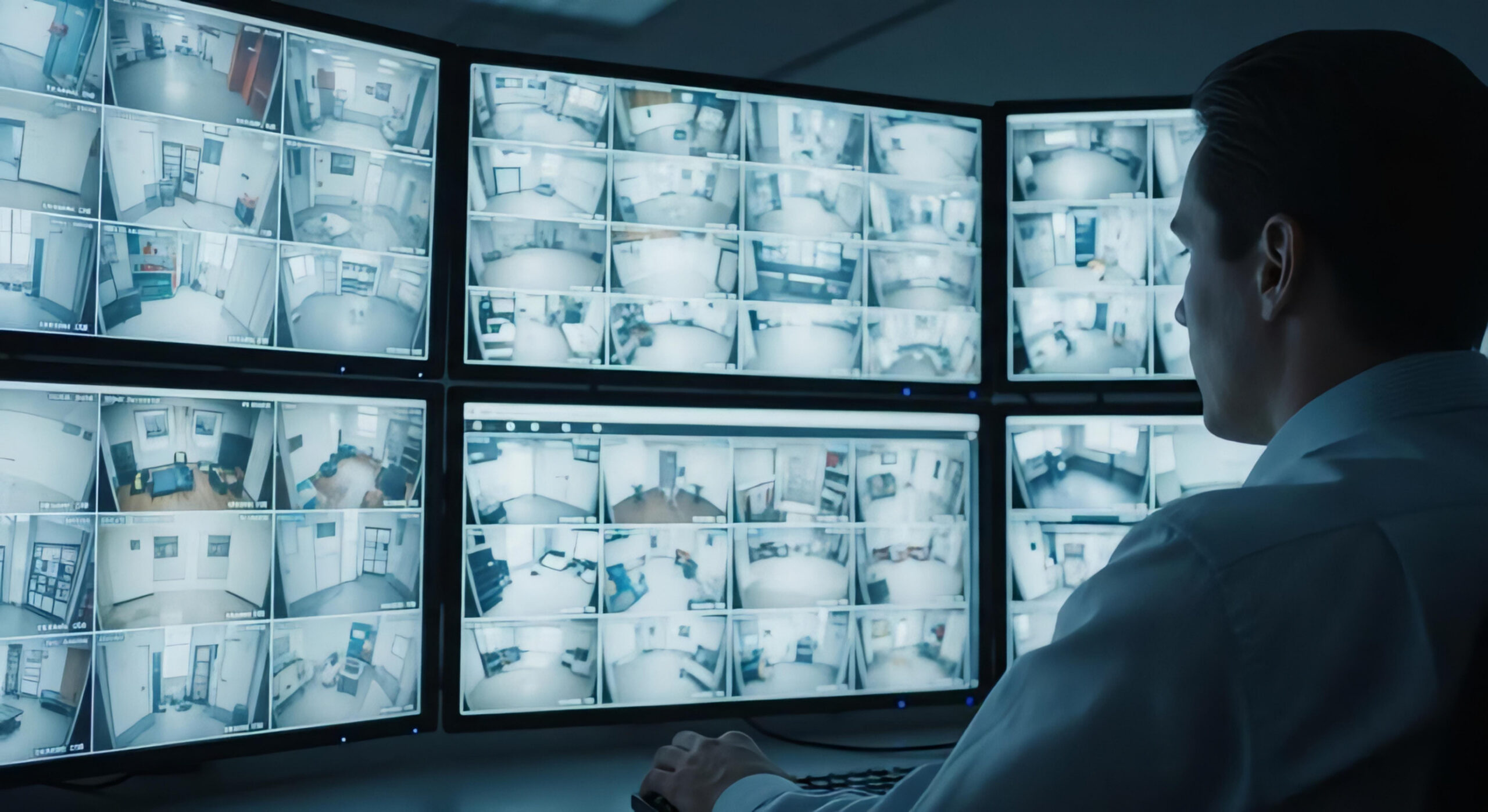
Security guard monitoring modern CCTV cameras in surveillance room. Male security guard in surveillance room.
For government facilities, documentation is not just a convenience, it is a legal requirement. Chain of custody for evidence, access records for sensitive personnel files, visitor logs for public buildings, all of these are subject to review by auditors, legal teams, and oversight bodies.
A unified government security system makes compliance considerably easier. Every access event is timestamped and logged automatically. Video is stored in a searchable format and can be retained based on policy rules. Reports can be generated on demand without manual compilation.
This matters in practical terms. When the Oklahoma County Sheriff's Office upgraded their facility security, the results went beyond preventing incidents. As Captain David Baisden noted, the environment inside the facility changed significantly once the integrated system was in place, with a dramatic reduction in altercations. The combination of visible coverage and real accountability changes behavior, not just response.
The Case for Centralized Monitoring Across Multiple Locations
Counties and municipalities often operate across several buildings: a main courthouse, satellite offices, a public works facility, a utilities building, and a records archive. Managing these as separate security environments creates gaps and multiplies administrative burden.
A centralized monitoring platform allows a single security operations team, or a contracted monitoring center, to watch all locations simultaneously. Alerts from any facility feed into one dashboard. Access logs from every building are searchable from one interface. If an incident happens at a satellite office while staff are focused elsewhere, the system catches it.
For Texas institutions, purchasing contracts like HGAC and TIPS make it straightforward to procure these systems at cooperative pricing without going through a full bid process for each location. Oklahoma institutions have access to state contract SW1048D for the same reason. These state contract options exist specifically to help public agencies get the right equipment without unnecessary procurement delays.
What the Assessment Process Looks Like
No two government facilities have the same layout, the same risk profile, or the same existing infrastructure. A quality security assessment for a courthouse in the Dallas-Fort Worth area is going to look different from one for a county building in Tulsa or a municipal facility in Springdale, Arkansas.
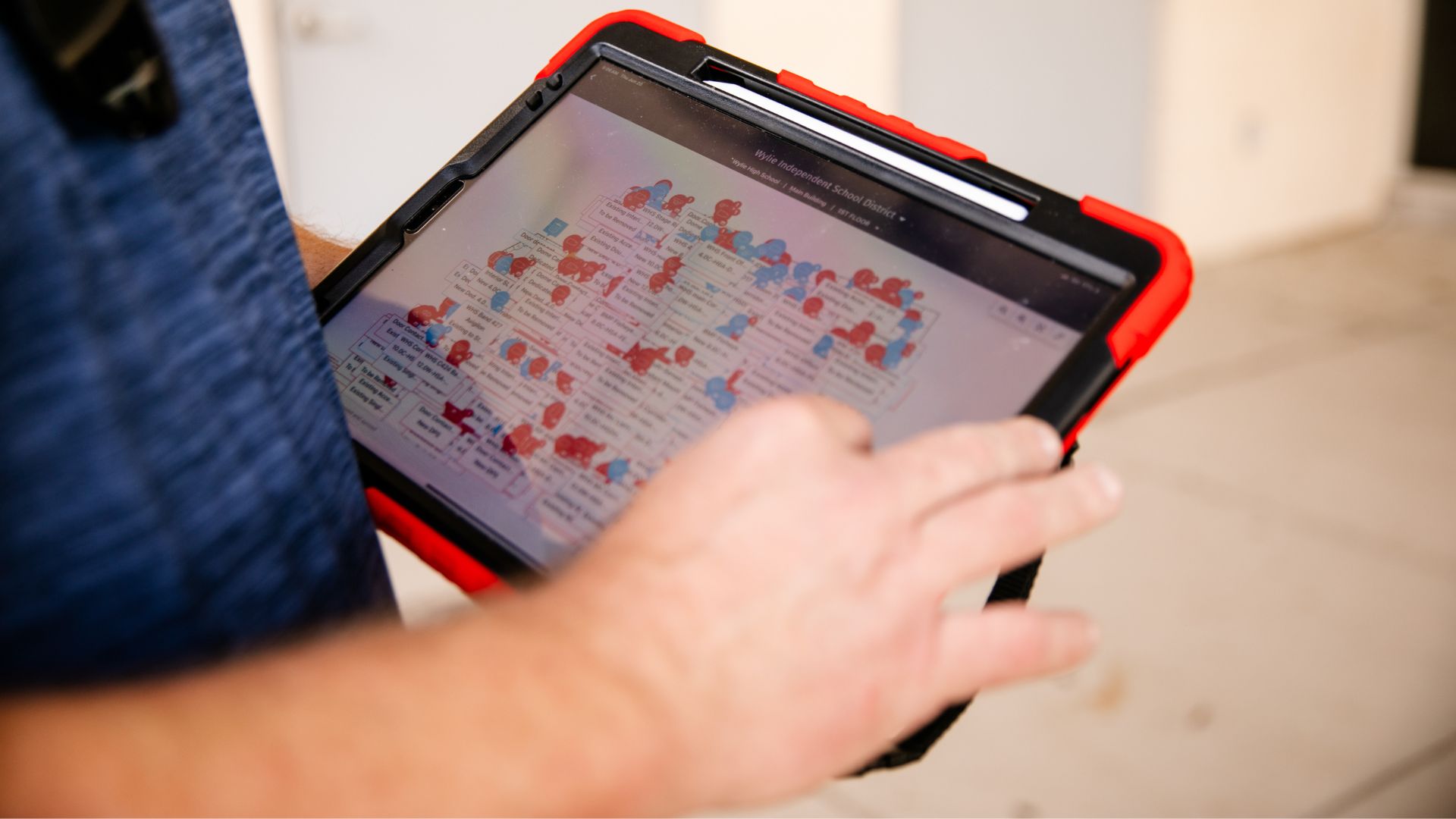
The right starting point is a walkthrough that maps every access point, identifies existing equipment worth integrating, flags gaps in coverage, and documents how staff currently move through the building. From that baseline, a security design can be built that layers the right technologies at each perimeter level without over-engineering areas that do not need it.
Integrated access control for government buildings is not about spending more on security. It is about making what exists actually work together. When the systems communicate, when the video is tied to the events, and when staff have real visibility across every entry point, the result is a building where accountability is built in and incidents are caught before they escalate.
Conclusion
Courthouses, municipal offices, and public facilities across Texas, Oklahoma, and Arkansas face a security challenge that isolated systems cannot solve. The real answer is integration: cameras that talk to access logs, visitor data tied to real-time alerts, and a single platform that gives security teams clear visibility across every door and every floor.
Digi Security Systems specializes in designing and installing exactly this kind of unified government security infrastructure, built around how each facility actually operates, not a one-size-fits-all template. Schedule a complimentary assessment to see where the gaps are and what a connected system would look like for your facility.